Sunday, October 7, 2012

Visit to SOUTH WEST AFRICA (NAMIBIA ) in 1966


VISIT TO SOUTH WEST AFRICAN ( NAMIBIA) IN 1966.


South West Africa (Namibia)
  
In 1966 I just turned 18 and got my drivers license .I was studying  at the  Art School in Bloemfontein decide to join my parents and the rest of the family on a winter vacation to Namibia -or South West Africa as it was called then. My grandfather's brother Wilfred emigrated there after the Boer War and his sons were farming on the Khomas Hochland near Windhoek -the capital of South West Africa.Today it is called Namibia.


South West Africa  Road

SWA was a deserted area and one drove for hours between towns. The landscape looked like the moon surface and it was located between two deserts .The Namib and the Kalahari . The first night we drove as far as the Kalahari dessert and tried to find a place to sleep. When we got to a camp in the desert the only had one room so my parents decided that they would take the room and Carin and Quintin the two younger ones would sleep on the floor.


Kalahari Desert


Pontiac Strato Chief 1961

 Charel and myself had to sleep on the front seat of the car and Zackie and Frikkie on the back seat. My father was driving a yellow Pontiac Strato Chief  during that time. This was a disaster but there was nothing else we could do. Every time I would turn around I would hit the horn of the car and that would wake everybody up. Very early in the morning we saw some Bushmen at the camp and they had a fire going so we the four of us joined them around the fire. It was at least warmer and more comfortable there than in the car.


Bushmen of the Kalahari

The Bushmen where very small and Carin at six years old was as tall as them. When they speak the click their tongues and it is a very strange sound to hear them talking to one another. At last my parents woke up and we were on our way continuing on to Windhoek the capital of SWA.


Carin with the Bushmen in  the Kalahari


 Windhoek is a wonderful town to while away the day. In downtown Windhoek you can find many examples of German colonial architecture, including the equestrian monument, the Alte Feste fort, Christuskirche (Christ’s Church), the well-kept gardens of Tintenpalast (Ink Palace), the House of Parliament, and the neatly preserved railway station northwest of the city center.


Alte Feste 1891

Present-day Windhoek was founded on 18 October 1890, when Von François fixed the foundation stone of the fort, which is now known as the Alte Feste  (Old Fortress). After 1907, development accelerated as people migrated from the countryside to the city. There was also a larger influx of European settlers arriving from Germany and South Africa. The German colonial era came to an end during World War 1 when South African troops occupied Windhoek in May 1915 on behalf of the British Empire. With South -West Africa  independence from South African administration in 1990, Windhoek was recognized as the capital city of the new Namibia .


Khomas Hochland


After lunch we drove into to Khomas Hochland where we were to visit my father three cousins.
Kallie , Boy and Uys Schickerling. They lived on three different  farms and were to  spend a few days with each of them. They were cattle farmers.


Schickerling family in the Khomas Hochland  near Windhoek


South Westerners are know for their hospitality and we were received with open arms. My fathers cousin use to visit "the Republic" (as they called South Africa) when they were kids but it was the first time we visited them. Oom Kallie and Tannie Bertha was out first hosts. He was the eldest. They took us out on their  big Landrover to go hunting. Everybody went along.  The meat of the buck that were shot, never went to waste. Biltong was made of it and the rest was given to the Africans -nothing was ever wasted or just killed for the sake of killing. 


My Father, Quintin and Frikkie, with the Kudus my father shot.


My father was a keen shot but this was the first time he killed a wild animal. He shot a Waterbuck .I got the feeling this was not something he enjoyed and I don't remember him shooting something again. The buck was loaded on the truck and taken home where it was cut up and the meat hung out to dry, after it was soaked in spices overnight.
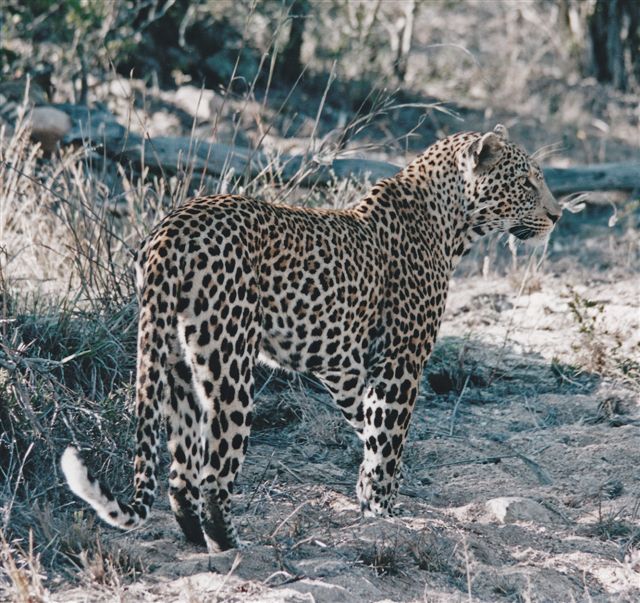


Leopard

The wild life in the Khomas Hochland is unbelievable with many types of buck, lions, leopards etc.


Lion


Orynx 


Herero women


Cousin, Carin and Quintin with some Herero women working on the farm.


I remember sitting in their living room reading  and hearing the Herero woman that worked in their house coming down the passage, her petticoats swishing against her legs. The Herero's style of dressing was influenced by the wives of German missionaries and colonialists who first came to the country in the early 1900s.The long dresses are heavy and reflect the style of the Victorian period with numerous petticoats worn to add fullness to their skirts. They are hand-sewn by the women who add their own personal style and flair. To wear them in the heat of the summer and can not be comfortable!


We went to visit Oom Uys and his young wife on their farm for a few days and he gave me a record of Mimi Coertse that I still have .When we went to visit Oom Uys and his wife Joy, we had to leave the Pontiac at a waterhole ,as the very slick city car was not suitable for these roads. They fetched us with a Landrover. When we got back a few days later the Pontiac was covered in dry slime. The  cattle licked it clean .The body of the car  might have had a salty taste but they it that they liked.. Oom Uys fetched us with a Landrover. That was the only way to reach their house deep into the Khomas Hochland. He was the youngest brother and a lot of fun. His wife Joy was very sophisticated and they had a beautiful home with several guests suites .She was  great cook and was used to having  house guests. We had a great time with them .After breakfast Oom Uys will get the Africans to form two teams  and they would play soccer. There is not too much work on a cattle farm it seemed!


Their son became a doctor and he was one of the doctors that Angelina  Jolie used when she gave birth to her daughter Shiloh  in April of  2006 in Swakopmund .


Wlotzkasbaken

The  Schickerling family had a beach house on Wlotzkasbaken  and they said we should, use it to visit the coast .  Wlotzkasbaken is situated on the coast of the Atlantic Ocean  approximately 30 km north of Swakopmund. The town  was not electrified and not connected to the public water system. Water was delivered by road and stored in private water towers that characterize the settlement's skyline. It consists of 106 houses which are all designed and built by their owners. Every house is self-sustaining with regards to water and electricity. Privacy of the holiday parcels is achieved by the large distance between the houses. There are no walls or fences anywhere; boundaries are demarcated with rocks.


It was a cozy cabin and we used candles for light. I remember the beach was covered with fog till late morning and early afternoon the mist came back again .One felt all alone in the world there with the candle light and the roar of the ocean all covered in fog so thick you could not see you hand in front of your eyes. The road from Swakopmund looked like a tar road but it was a salt road. When the fog wet the road it became very slipper and dangerous to drive on. It was winter after all but during the day it heated up nicely and my brothers and father enjoyed the fishing. It is a fishing paradise.


My mother best friend Hannetjie's daughter  Rita was married to the son of a very prominent German family in SWA called  Enrich. They came to visit us there and he showed us how to smoke the fish in a tub  outside.


Seal

One morning we found an  seal's body on the beach. It was enormous .When they are swimming in the ocean one does not realize how large they are.


Skeleton Coast.

This is part of  the Skeleton Coast . In the days of human-powered boats it was possible to get ashore through the surf but impossible to launch from the shore. The only way out was by going through a marsh hundreds of miles long and only accessible through a hot and arid desert. The coast is named after the beached whale and seal bones which covered the shore when the whaling  industry was still active, as well as the skeletal shipwrecks  caused by rocks offshore in the fog. More than a thousand vessels of various sizes and areas litter the coast.


Swakopmund with the desert in the background


About 30 miles south of  Wlotzkasbaken is Swakopmund. It  is a beach resort  and an example of German colonial  architecture. It was founded in 1892 as the main harbor for German South -West Africa , and a sizable part of its population is still German-speaking today.


Walvis Bay


My father in silhouette in Walvis Bay

Walvis Bay lies some 30 miles further south of Swakopmund accessed on a stunning ocean road seamed by mighty dunes. The town is situated at a wide lagoon with innumerable sea birds , pelicans and flamingos. On a clear day one can see the black and white lighthouse at the tip of the premonitory at the northwest of the lagoon. Walvis Bay had already been discovered by Diaz as early as 1487 but was founded only in 1793 by the Cape Dutch and two years later annexed by the British.


Fish River Canyon

After a few days at the coast we turned back inland and started our return journey back home. We drove back to Windhoek and then south to visit the Fish River Canyon . The Canyon  is located in the southern part  of SWA. It is the second largest canyon in the world ,only being surpassed by the famous Grand Canyon in Colorado, and the largest in Africa . It features a gigantic ravine, in total about 100 miles (160 km) long, up to 27 km wide and in places almost 550 meters deep.


Charel, Quintin Frikkie en Zackie at the Fish River Canyon


Henry + Quintin


Swakara Jacket 


From there we drove through Mariental back to "The Republic" .Little did we know that about 15 years later we would be coming back there when my brother Charel married Geretha Steenkamp who grew up on a Karakul farm near Mariental in the Kalahari. 
Swakara ( South West African Karakul ) was the name given the this Persian lamb or Karakul fur 
My parents decided to keep driving through the night. At about 4:00 am my father asked me to drive as he was falling asleep. My mother was sitting next to me and was keeping me awake as she was doing  through the night with my father. About 50 miles from Bloemfontein -just as the sun was rising I saw a dog running towards to road. I was so tired I could not even put the brakes on . Luckily I kept going and we missed the dog. My mother started to laugh but I think she was so exhausted that it was more a reaction to than everything else. When we got home we drove into garage -left the car as it was - and we all went to bed at 7:00 am!
We awoke late that afternoon and realizes while we were gone, there was a power outage and everything thing that was left in the deep freezer and the refrigerator was spoiled and was rotten.
My mother packed the fridge with coal for weeks to get the horrible stench out!


Wednesday, September 5, 2012

A SOUTH AFRICAN FARM in the 1950's


A SOUTH AFRICAN FARM in the 1950's.


My paternal grandfather  Henry Uys Schickerling , who I am named after ,was born December 7 1888 on the farm  "Bergfontein,"  "Ruigtepoort" or " Botany Grove" in the district of  Fauresmith in the Orange Free State. They were a wealthy farmers and had several farms between Fauresmith and  Edenburg .


Fauresmith OFS had the railroad running right through the town's main road.
As a boy of 11 young Henry  was interned with his mother and other siblings in the Orange River concentration camp during the Boer War ( 1898-1902). Because of his father in law's intervention with the Cape Authorities  Henry's father , Johan Frederick Schickerling was not send to Ceylon as a POW but interned at the same camp as his wife and children. Young Henry's mother Isabella Uys was from a very prominent family from Paarl in the Cape Province. Her first cousin Isabella Krige (Ouma Issie) married Jan Smuts the later Prime Minister of South Africa. After the war the Schickerling family returned to their  farm Bergfontein and found everything burnt to the ground and all their cattle killed .The only things that was left was an old dog.
They had to start from scratch.


My grandfather Henry and his brother Reitz decided to move to the Vryburg district to branch out when they got older. After a while there they moved to the Delareyville district  in the Western Transvaal and rented a farm "Oshoek". Later my grandfather bought the farm" Boschbult" between Ottosdal  and Delareyville  .The last battle of the Boer War  was fought on the farm and there is a monument commemorating "The Battle of Boschbult."


"Battle of Boschbult"


The town of Ottosdal was established as a Dutch Reformed Church Parish in 1913 on the farm Korannafontein and named after its owner, G P Otto.


The Dutch Reformed Church in Delareyville designed by Gerard Moerdyk who also designed the Voortrekker Monument as well as the Prime Minister's residence "Libertas" amongst many other buildings in South Africa.


Delareyville was named after the Boer General Koos De la Rey.


My grandfather met my grandmother Anna Elizabeth Kotzé  when she came  to teach in the Delareyville  district. She had a brother living there so after she finished her studies in Wellington Teachers College in the Cape Province ,she moved to the Western Transvaal .They got married in  October of 1920.


Hopefield farm.West Coast.


Hopefield.

 
 Anna Elizabeth Kotzé.
 
She was born May 13 1894 on the farm "Caledonia " near the town of Hopefield on the West Coast about 125 miles north from Cape Town. The farm was located where the Salt -and the Berg rivers met. She was an educated and refined young lady from "die Boland" and rolled her R's when she spoke. They decided that my grandmother would keep teaching  to help pay for the farm.Women during that time did not work outside of the home so she was not typical at all. They had four sons of which my father- John Frederick -was the eldest. Johannes Kotzé ,Henry Uys and Theunis where the other sons.


Every morning they would hitch the horses to the  cart and she would drive the 10 miles to  the school with the boys -and back .She was one of three teachers at the school. My father told us of an incident that happened one morning she was driving .There was a brook that they had to cross so the road went down into the ravine .They had to pass through the shallow water to get to the other side. As they went down the embankment she held the reigns very tight to control the horses .One of the horses slipped and propelled  her off the cart and she fell on the other side of the brook in the soft sand. Their giggles quickly stopped when they saw her face. She was not one to be messed with!
Years later my mother would come to the same school as a young teacher and met my grandmother . She was invited home for a weekend and met my father who was visiting the farm from Johannesburg where he was working. They got married in 1947 on the 12th of July .


My grandmother loved my mother as she had no daughters of her own. After the farm was paid off she had her own income and spent lavishly on my mother's trousseau for the wedding.  She was very liberated as she never asked my grandfather for money. Once a year she would take the boys to the "Boland" to visit her family. There she would buy the latest fashions and household goods and have it shipped back to the Transvaal .


My Paternal Grandparents on my parent's wedding day- photographed with my father's family.
Uys, Freddie, Rina.Hannes en Tienie,
Ouma Anna and  Oupa Henry Schickerling.


Ouma Babes and my mother many years later when she was deep in her 90's .


Oupa Reitz was married to Ouma Babes and his widowed mother Isabella Schickerling came from the Free State to live with them.They never had kids of their own but adopted Skikkie who's mother was a sister of my Grandfather and Oupa Reitz. We all loved Oupa Reitz as he was very soft spoken and a very kind man. Ouma Babes was tough and we were all scared of her.She was kind enough in her own way and stuffed you with cookies and ginger beer when you visited .Later when she got older she mellowed and I loved listening to her stories of the old times......She use to wear a big Voortrekker kappie on her head whenever she went out  into  the sun.


One day she was at a wedding with my grandparents and a neighbor who was a rather big woman walked by with her henpecked husband who was much smaller than she was, She leaned over to my mother and said "Daar is poephol en portret ook"She loved to play Jukskei and was a real champ .This is a South African game where you threw wooden "bottles" at a peg in the ground. They would host Jukskei games on their farm on Saturday afternoons.


Her house was always dark - like most farm houses during that time .The curtains drawn to keep out the heat of the day. I was fascinated as she had black and white spotted chickens -not like my grandmother who had Rhode Island Reds.


She also had my Great Grandmother Schickerling home  organ,  the  Harmonium or traporreltjie, that she promised I could have .Later she changed her mind and gave it to Reginald that was Skikkie's son and had Oupa Reitz' name. I did not mind. He appreciates it and takes care of it.


The Harmonium .
To play the organ one had to pump the two pedals below  to produce  enough air for it to make a sound.


Typical South African Farmhouse .


When I became aware of my grandparents  they were living on the farm. We would travel from Johannesburg in my father's navy Commer delivery van that he used for work . BERNINA  was written in big red letter on the side - Rand Sewing Machines in white below. There would be a mattress in the back for us kids to lay down on , as there were no seats at the back.


Me photographed with  the navy Commer delivery van behind me ,at out home in Parkhurst.


By the time we got to the farm we would be covered in the red Western Transvaal dust and ones eyes and the corners of you mouth will be  clogged with dust. It was a dirt road from Klerksdorp. Years later my father sold that Commer to Abel one of the Africans working for Oom Johannes and he used  it till it fell apart. I saw that old car on blocks for many years.


 My father's second brother Johannes was married to neighborhood girl Dina and living in another house on the farm, but his two younger brothers ,Uys and Tienie were still living at home and slept in the buitekamer on the stoep.Every farmhouse had an outside room for the "boys." The house was similar to the one above but it had a garden and big trees around the house. A big orchard supplied the household of fresh fruit. The buitekamer was on one end of the porch. From the ceiling there were rows onions and garlic hanging to dry- How I  hate that smell up to this day!


Rondawel.


Cream Separator.

Next to the back door was a rondawel where the cream was separated from the milk as well as the butter earn to make butter. The buttermilk was used to bake rusks  .Under the trees was a walk-in cooler with water dripping over the anthracite walls  to  keep the meat , milk ,eggs, cream and butter cool.


The farm supplied everything the family needed. During the summer months my grandmother would supervise the African woman canning-and drying - the fruit and vegetables that was grown on the farm. Nothing was wasted. Bread was baked once a week and one of those big brown bread slices, spread with home made butter and honey- or home made jam -was enough to last you for the day. My grandfather had beehives to supply the table with fresh honey. Every second Friday evenings a lamb was slaughtered for meat as well as few chickens.


There was a sheep's kraal made out of packed stones and every night when the sheep came home they were counted. How they could count 300 sheep when they all moved around I could never understand.


Every morning and evening the cows were milked .The would stand there very placid eating their hay while they were milked. Once they were milked the calves could drink from the udder and get the left over milk.


Seeing the animals on the farm made us understand life and death better. Death  became a part of life and not something to fear. Seeing the animals have sex and give birth made us understand nature and ourselves as well.


Leg of Lamb


Biltong and Droê Wors.


During the winter months they would slaughter an ox as well as a pig to make biltong and dried sausage- droê wors .They did this during the winter as it was cool enough to dry the meat and to make sure it did not spoil.


Melktert ( Milk Tart)


Soetkoekies


Koeksisters


Gemmerkoekies


The kitchen was the center of the house and it had a big table in there with chairs around it. The big coal stove kept it warm and cozy during the winter and visitors almost never  used the living room unless it was the minister or strangers visiting. There one was served coffee or tea and always something to eat. Soetkoekies (Sweet biscuits)  Gemmerkoekies ( Ginger snaps) Melktert and Koeksisters were favorites During the summer we would drink ginger beer with raisins floating in the beer. Canned watermelon pieces were also delicious .


South African Breakfast


They got up very early and by 5:00 am the Africans would come to the kitchen door  and over some coffee the day was planned. If it was cold they would stand around a fire they made outside and discuss their plans. At around 8:30 -9:00 am my grandfather would return home   for breakfast with my uncles .Most probably several neighbor would join them as well. On the farm one never knew when visitor would show up. They would eat a good breakfast with eggs, boerewors and bacon (home made)tomatoes  or  my grandmother would even slice a leg of lamb into the pan to fry with the eggs. Home made bread- and butter ,with coffee to wash it all down. The coffee pot would be on the stove most of the day.


South African Sunday Dinner


The main meal of the day would be cooked for the afternoon with a meat dish ,potatoes and fresh vegetables from the garden .Chicken or Leg of Lamb was a favorite choice for Sunday Dinner.
Baked puddings with custard was served often.


The dining room was used on Sunday mornings to listen to the church service on the radio.
 In the kitchen the African women where preparing the lunch meal and my grandmother would slip in and out to supervise. We would listen to the Dutch Reformed Service at  10:30 am broadcast by the SABC  .My grandfather would follow in the Bible and the hymns we would sing along. As kids we knew to sit still and be respectful. When the prayer was said we had to kneel on the chair and close our eyes. Delareyville or Ottosdal  was too far to drive to church every Sunday so my grandparents went whenever they could but  Communion- every three months - was never missed.


The family was very instrumental raising funds for the new church that was  to be built in Delareyville and they were very friendly with the Ds. Potgieter and his wife whom  had 5 sons .One year while my father was a young boy they all  went on vacation together to the Kruger National Park- as well as to Lorenco Marques.


A dark green velvet curtain  in the passage separated  the Living Room and bedrooms from the rest of the house. This is where the  phone was located. Each house had a ring .Three short rings were my grandparent's call. It would ring day and night and I could never differentiate the short or the long rings. All of a sudden my grandmother would go to the phone pick the hearing aid and press it to her ear. Then she would speak into the cup in front of her.I could never understand how she knew it was for her. It was a party line so people could listen to your conversation. If somebody was ill one just had to pick up telephone and listened when their ring came up and get all the information about the patient on the line. You could speak to  anybody on your line for free using the sling and ringing out the long and short tones. Nobody spoke for long You said what you had to say and that was it. If a conversation went on too long people would pick and ask "busy" that was the sign to get off the line!. When I got older I loved to sit and listen to all the conversations- as long as I was not caught!


John Deere Tractor


My grandfather had a John Deere tractor that scared the living daylights out of me .If they started that thing early in the morning I made sure I was far away .If they started it in the barn the sound was even worse that outside. It sounded like a bomb going off and then it would fire like a machine gun before it got going. They used a hand sling to get it  started and the Africans use to take turns at the sling. The two front wheels were close together and the big wheels were enormous to me as a boy. Later I enjoy taking a ride on it and even to drive it now and then under that watchful eyes of one of the adults.


There was a bathroom with a bath but no toilet in the house. There was a boiler for hot water that was lit when you wanted to have a bath. An outhouse was used and that was a terrifying thing to me.I was so scared that I would fall into that hole that I never went near it until I was much older. I would rather sit behind a bush than go in there. In the afternoon the women would take a walk there and take turns. The men folk use to pie behind a bush and only visited it when necessary. The whole world would see you go there and knew what you were up to. It was built quite a way from the house.


There was electricity and they used candles and a paraffin lamp that hung over the kitchen table at night. As we never used any other room at night before we went to bed  it was the only one lit up . I avoided  going  down the dark passage  to the bedroom, with only a candle. Many a night after we were put to bed I would run back to the kitchen and stay there until my parents came to bed.
As the eldest grandchild I got a lot of leeway from my grandmother and I loved her. She was very warm and open and could do anything. She was a great cook. She would conduct the choir .She was a great organizer but if  a child  misbehaved you got it from her. She was not a teacher for so may years for nothing. You could not get away with anything.
Ouma Anna  was very different from my de Beer grandmother  Ouma Kittie who  was very prim and proper. As Ouma Anna  was from the Cape she would have a glass of wine now and then unlike my mother or her mother. Ouma Anna could use spicy language like most Bolanders and she was very much down to earth with a good sense of humor.
When my father was a about 17 he developed Rheumatic Fever. My grandparents decided to send him to Johannesburg where he went to stay with a full time nurse- Mrs Swales. After getting back on his feet he decided to stay in Johannesburg and started working for the CNA. His three other brothers stayed on the farm  but when my father retired  he moved back to the farm with my mother and they lived there until he died in 2000. My mother then sold their farm to my cousin so it is still in the family.
My father was called Oubaas by his parents and brothers as well as the Africans on the farm.
My grandfather was called Baas Henry and I was Kleinbaas as the oldest grandchild. Outa Booi was there for many years and he was older than my father. The Africans were part of the family and we had to show them respect as to any other elder person.We called the older African men "Outa" and the older African woman "Aia".
My two unmarried uncles  ,Uys and Tienie, got married to two  Theunisen sister from a nearby farm. Meisie and Toy . My grandparents decided it was time to retire so Oom Uys and his wife Tannie Toy moved into their house.They made drastic changes to the house and farm. They were a younger generation and wanted to lead a more modern life. My grandmother never set her foot back in that house .She would come and visit the other son's families , but never went to her old home .
Oom Tienie and Tannie Meisie built a new home on another section of the farm. We now had three homes on the farm to visit and as the family grew we would visit at least 4 times a year. My younger brothers loved those stays it and they loved it even more that they did not have to bathe......They also spent many summer holiday on the farm. My uncles farmed  my father share of the land  and paid him a percentage  of the harvest.


Dutch Reformed church in Wolmaranstad.
Another Moerdyk designed church.


My grandparents retired to Wolmaranstad .It was the closet town to the farm that had electricity. There my grandfather kept busy by breeding rabbits for the Italian market in Johannesburg.
He kept his beehives on different farms and we would sell the honey in Johannesburg for him. He never stopped working and kept himself busy.


My Uncles Johannes , Uys, Oupa Reitz .Tienie and my father with his back to the camera,
 at my Grandmother's funeral in Wolmaranstad.


My grandmother died in February of 1967 .She was 73 years old. She suffered from intestinal cancer for many years. She was in hospital in Klerksdorp for the best part of the year before passing.
The family asked us to arrange for flowers from Bloemfontein where we lived and I ordered a big bouquet of white flowers that covered her coffin. The night we arrived in Wolmaranstad m grandfather was sad but when he said grace at table he thanked God for her life and ending her suffering.


My grandfather Henry Uys Schickerling just before his death.
My father is on the right.


Oupa Henry in better years.


My grandfather then married Meraai Kirsten and when she died ten years later, he remarried once again.He died in 1984 at the age of 97.Both my grandparents are buried in Wolmaranstad. My grandmother  appreciated my interest in music and the arts and was very proud of me.I think she understood where I came from. Year later I went to a spiritualist in Johannesburg and she spoke about guardian angels that we all have. While she was talking to me about that she folded  her hands on her chest - just the way my Grandmother use to - and I felt that was a sign that she was looking out for  me.