A SOUTH AFRICAN FARM in the 1950's.
My paternal grandfather Henry Uys Schickerling , who I am named after ,was born December 7 1888 on the farm "Bergfontein," "Ruigtepoort" or " Botany Grove" in the district of Fauresmith in the Orange Free State. They were a wealthy farmers and had several farms between Fauresmith and Edenburg .

Fauresmith OFS had the railroad running right through the town's main road.
As a boy of 11 young Henry was interned with his mother and other siblings in the Orange River concentration camp during the Boer War ( 1898-1902). Because of his father in law's intervention with the Cape Authorities Henry's father , Johan Frederick Schickerling was not send to Ceylon as a POW but interned at the same camp as his wife and children. Young Henry's mother Isabella Uys was from a very prominent family from Paarl in the Cape Province. Her first cousin Isabella Krige (Ouma Issie) married Jan Smuts the later Prime Minister of South Africa. After the war the Schickerling family returned to their farm Bergfontein and found everything burnt to the ground and all their cattle killed .The only things that was left was an old dog.
They had to start from scratch.

My grandfather Henry and his brother Reitz decided to move to the Vryburg district to branch out when they got older. After a while there they moved to the Delareyville district in the Western Transvaal and rented a farm "Oshoek". Later my grandfather bought the farm" Boschbult" between Ottosdal and Delareyville .The last battle of the Boer War was fought on the farm and there is a monument commemorating "The Battle of Boschbult."


The town of Ottosdal was established as a Dutch Reformed Church Parish in 1913 on the farm Korannafontein and named after its owner, G P Otto.

The Dutch Reformed Church in Delareyville designed by Gerard Moerdyk who also designed the Voortrekker Monument as well as the Prime Minister's residence "Libertas" amongst many other buildings in South Africa.
Delareyville was named after the Boer General Koos De la Rey.
Delareyville was named after the Boer General Koos De la Rey.

My grandfather met my grandmother Anna Elizabeth Kotzé when she came to teach in the Delareyville district. She had a brother living there so after she finished her studies in Wellington Teachers College in the Cape Province ,she moved to the Western Transvaal .They got married in October of 1920.

Hopefield farm.West Coast.

Hopefield.

Anna Elizabeth Kotzé.
She was born May 13 1894 on the farm "Caledonia " near the town of Hopefield on the West Coast about 125 miles north from Cape Town. The farm was located where the Salt -and the Berg rivers met. She was an educated and refined young lady from "die Boland" and rolled her R's when she spoke. They decided that my grandmother would keep teaching to help pay for the farm.Women during that time did not work outside of the home so she was not typical at all. They had four sons of which my father- John Frederick -was the eldest. Johannes Kotzé ,Henry Uys and Theunis where the other sons.

Every morning they would hitch the horses to the cart and she would drive the 10 miles to the school with the boys -and back .She was one of three teachers at the school. My father told us of an incident that happened one morning she was driving .There was a brook that they had to cross so the road went down into the ravine .They had to pass through the shallow water to get to the other side. As they went down the embankment she held the reigns very tight to control the horses .One of the horses slipped and propelled her off the cart and she fell on the other side of the brook in the soft sand. Their giggles quickly stopped when they saw her face. She was not one to be messed with!
Years later my mother would come to the same school as a young teacher and met my grandmother . She was invited home for a weekend and met my father who was visiting the farm from Johannesburg where he was working. They got married in 1947 on the 12th of July .

My grandmother loved my mother as she had no daughters of her own. After the farm was paid off she had her own income and spent lavishly on my mother's trousseau for the wedding. She was very liberated as she never asked my grandfather for money. Once a year she would take the boys to the "Boland" to visit her family. There she would buy the latest fashions and household goods and have it shipped back to the Transvaal .

My Paternal Grandparents on my parent's wedding day- photographed with my father's family.
Uys, Freddie, Rina.Hannes en Tienie,
Ouma Anna and Oupa Henry Schickerling.

Ouma Babes and my mother many years later when she was deep in her 90's .
Oupa Reitz was married to Ouma Babes and his widowed mother Isabella Schickerling came from the Free State to live with them.They never had kids of their own but adopted Skikkie who's mother was a sister of my Grandfather and Oupa Reitz. We all loved Oupa Reitz as he was very soft spoken and a very kind man. Ouma Babes was tough and we were all scared of her.She was kind enough in her own way and stuffed you with cookies and ginger beer when you visited .Later when she got older she mellowed and I loved listening to her stories of the old times......She use to wear a big Voortrekker kappie on her head whenever she went out into the sun.

One day she was at a wedding with my grandparents and a neighbor who was a rather big woman walked by with her henpecked husband who was much smaller than she was, She leaned over to my mother and said "Daar is poephol en portret ook"She loved to play Jukskei and was a real champ .This is a South African game where you threw wooden "bottles" at a peg in the ground. They would host Jukskei games on their farm on Saturday afternoons.

Her house was always dark - like most farm houses during that time .The curtains drawn to keep out the heat of the day. I was fascinated as she had black and white spotted chickens -not like my grandmother who had Rhode Island Reds.

She also had my Great Grandmother Schickerling home organ, the Harmonium or traporreltjie, that she promised I could have .Later she changed her mind and gave it to Reginald that was Skikkie's son and had Oupa Reitz' name. I did not mind. He appreciates it and takes care of it.

The Harmonium .
To play the organ one had to pump the two pedals below to produce enough air for it to make a sound.

Typical South African Farmhouse .
When I became aware of my grandparents they were living on the farm. We would travel from Johannesburg in my father's navy Commer delivery van that he used for work . BERNINA was written in big red letter on the side - Rand Sewing Machines in white below. There would be a mattress in the back for us kids to lay down on , as there were no seats at the back.

Me photographed with the navy Commer delivery van behind me ,at out home in Parkhurst.

By the time we got to the farm we would be covered in the red Western Transvaal dust and ones eyes and the corners of you mouth will be clogged with dust. It was a dirt road from Klerksdorp. Years later my father sold that Commer to Abel one of the Africans working for Oom Johannes and he used it till it fell apart. I saw that old car on blocks for many years.

My father's second brother Johannes was married to neighborhood girl Dina and living in another house on the farm, but his two younger brothers ,Uys and Tienie were still living at home and slept in the buitekamer on the stoep.Every farmhouse had an outside room for the "boys." The house was similar to the one above but it had a garden and big trees around the house. A big orchard supplied the household of fresh fruit. The buitekamer was on one end of the porch. From the ceiling there were rows onions and garlic hanging to dry- How I hate that smell up to this day!

Rondawel.

Cream Separator.
Next to the back door was a rondawel where the cream was separated from the milk as well as the butter earn to make butter. The buttermilk was used to bake rusks .Under the trees was a walk-in cooler with water dripping over the anthracite walls to keep the meat , milk ,eggs, cream and butter cool.

The farm supplied everything the family needed. During the summer months my grandmother would supervise the African woman canning-and drying - the fruit and vegetables that was grown on the farm. Nothing was wasted. Bread was baked once a week and one of those big brown bread slices, spread with home made butter and honey- or home made jam -was enough to last you for the day. My grandfather had beehives to supply the table with fresh honey. Every second Friday evenings a lamb was slaughtered for meat as well as few chickens.

There was a sheep's kraal made out of packed stones and every night when the sheep came home they were counted. How they could count 300 sheep when they all moved around I could never understand.

Every morning and evening the cows were milked .The would stand there very placid eating their hay while they were milked. Once they were milked the calves could drink from the udder and get the left over milk.

Seeing the animals on the farm made us understand life and death better. Death became a part of life and not something to fear. Seeing the animals have sex and give birth made us understand nature and ourselves as well.

Leg of Lamb

Biltong and Droê Wors.

During the winter months they would slaughter an ox as well as a pig to make biltong and dried sausage- droê wors .They did this during the winter as it was cool enough to dry the meat and to make sure it did not spoil.

Melktert ( Milk Tart)

Soetkoekies

Koeksisters

Gemmerkoekies
The kitchen was the center of the house and it had a big table in there with chairs around it. The big coal stove kept it warm and cozy during the winter and visitors almost never used the living room unless it was the minister or strangers visiting. There one was served coffee or tea and always something to eat. Soetkoekies (Sweet biscuits) Gemmerkoekies ( Ginger snaps) Melktert and Koeksisters were favorites During the summer we would drink ginger beer with raisins floating in the beer. Canned watermelon pieces were also delicious .

South African Breakfast
They got up very early and by 5:00 am the Africans would come to the kitchen door and over some coffee the day was planned. If it was cold they would stand around a fire they made outside and discuss their plans. At around 8:30 -9:00 am my grandfather would return home for breakfast with my uncles .Most probably several neighbor would join them as well. On the farm one never knew when visitor would show up. They would eat a good breakfast with eggs, boerewors and bacon (home made)tomatoes or my grandmother would even slice a leg of lamb into the pan to fry with the eggs. Home made bread- and butter ,with coffee to wash it all down. The coffee pot would be on the stove most of the day.

South African Sunday Dinner

The main meal of the day would be cooked for the afternoon with a meat dish ,potatoes and fresh vegetables from the garden .Chicken or Leg of Lamb was a favorite choice for Sunday Dinner.
Baked puddings with custard was served often.
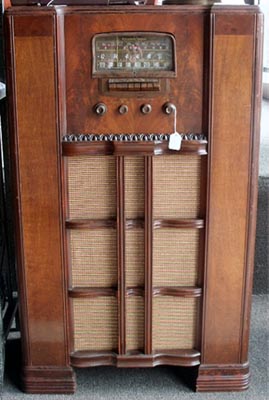
The dining room was used on Sunday mornings to listen to the church service on the radio.
In the kitchen the African women where preparing the lunch meal and my grandmother would slip in and out to supervise. We would listen to the Dutch Reformed Service at 10:30 am broadcast by the SABC .My grandfather would follow in the Bible and the hymns we would sing along. As kids we knew to sit still and be respectful. When the prayer was said we had to kneel on the chair and close our eyes. Delareyville or Ottosdal was too far to drive to church every Sunday so my grandparents went whenever they could but Communion- every three months - was never missed.

The family was very instrumental raising funds for the new church that was to be built in Delareyville and they were very friendly with the Ds. Potgieter and his wife whom had 5 sons .One year while my father was a young boy they all went on vacation together to the Kruger National Park- as well as to Lorenco Marques.

A dark green velvet curtain in the passage separated the Living Room and bedrooms from the rest of the house. This is where the phone was located. Each house had a ring .Three short rings were my grandparent's call. It would ring day and night and I could never differentiate the short or the long rings. All of a sudden my grandmother would go to the phone pick the hearing aid and press it to her ear. Then she would speak into the cup in front of her.I could never understand how she knew it was for her. It was a party line so people could listen to your conversation. If somebody was ill one just had to pick up telephone and listened when their ring came up and get all the information about the patient on the line. You could speak to anybody on your line for free using the sling and ringing out the long and short tones. Nobody spoke for long You said what you had to say and that was it. If a conversation went on too long people would pick and ask "busy" that was the sign to get off the line!. When I got older I loved to sit and listen to all the conversations- as long as I was not caught!

John Deere Tractor

My grandfather had a John Deere tractor that scared the living daylights out of me .If they started that thing early in the morning I made sure I was far away .If they started it in the barn the sound was even worse that outside. It sounded like a bomb going off and then it would fire like a machine gun before it got going. They used a hand sling to get it started and the Africans use to take turns at the sling. The two front wheels were close together and the big wheels were enormous to me as a boy. Later I enjoy taking a ride on it and even to drive it now and then under that watchful eyes of one of the adults.

There was a bathroom with a bath but no toilet in the house. There was a boiler for hot water that was lit when you wanted to have a bath. An outhouse was used and that was a terrifying thing to me.I was so scared that I would fall into that hole that I never went near it until I was much older. I would rather sit behind a bush than go in there. In the afternoon the women would take a walk there and take turns. The men folk use to pie behind a bush and only visited it when necessary. The whole world would see you go there and knew what you were up to. It was built quite a way from the house.

There was electricity and they used candles and a paraffin lamp that hung over the kitchen table at night. As we never used any other room at night before we went to bed it was the only one lit up . I avoided going down the dark passage to the bedroom, with only a candle. Many a night after we were put to bed I would run back to the kitchen and stay there until my parents came to bed.
As the eldest grandchild I got a lot of leeway from my grandmother and I loved her. She was very warm and open and could do anything. She was a great cook. She would conduct the choir .She was a great organizer but if a child misbehaved you got it from her. She was not a teacher for so may years for nothing. You could not get away with anything.
Ouma Anna was very different from my de Beer grandmother Ouma Kittie who was very prim and proper. As Ouma Anna was from the Cape she would have a glass of wine now and then unlike my mother or her mother. Ouma Anna could use spicy language like most Bolanders and she was very much down to earth with a good sense of humor.
When my father was a about 17 he developed Rheumatic Fever. My grandparents decided to send him to Johannesburg where he went to stay with a full time nurse- Mrs Swales. After getting back on his feet he decided to stay in Johannesburg and started working for the CNA. His three other brothers stayed on the farm but when my father retired he moved back to the farm with my mother and they lived there until he died in 2000. My mother then sold their farm to my cousin so it is still in the family.
My father was called Oubaas by his parents and brothers as well as the Africans on the farm.
My father was called Oubaas by his parents and brothers as well as the Africans on the farm.
My grandfather was called Baas Henry and I was Kleinbaas as the oldest grandchild. Outa Booi was there for many years and he was older than my father. The Africans were part of the family and we had to show them respect as to any other elder person.We called the older African men "Outa" and the older African woman "Aia".
My two unmarried uncles ,Uys and Tienie, got married to two Theunisen sister from a nearby farm. Meisie and Toy . My grandparents decided it was time to retire so Oom Uys and his wife Tannie Toy moved into their house.They made drastic changes to the house and farm. They were a younger generation and wanted to lead a more modern life. My grandmother never set her foot back in that house .She would come and visit the other son's families , but never went to her old home .
Oom Tienie and Tannie Meisie built a new home on another section of the farm. We now had three homes on the farm to visit and as the family grew we would visit at least 4 times a year. My younger brothers loved those stays it and they loved it even more that they did not have to bathe......They also spent many summer holiday on the farm. My uncles farmed my father share of the land and paid him a percentage of the harvest.

Dutch Reformed church in Wolmaranstad.
Another Moerdyk designed church.
My grandparents retired to Wolmaranstad .It was the closet town to the farm that had electricity. There my grandfather kept busy by breeding rabbits for the Italian market in Johannesburg.
He kept his beehives on different farms and we would sell the honey in Johannesburg for him. He never stopped working and kept himself busy.

My Uncles Johannes , Uys, Oupa Reitz .Tienie and my father with his back to the camera,
at my Grandmother's funeral in Wolmaranstad.
My grandmother died in February of 1967 .She was 73 years old. She suffered from intestinal cancer for many years. She was in hospital in Klerksdorp for the best part of the year before passing.
The family asked us to arrange for flowers from Bloemfontein where we lived and I ordered a big bouquet of white flowers that covered her coffin. The night we arrived in Wolmaranstad m grandfather was sad but when he said grace at table he thanked God for her life and ending her suffering.

My grandfather Henry Uys Schickerling just before his death.
My father is on the right.

Oupa Henry in better years.
My grandfather then married Meraai Kirsten and when she died ten years later, he remarried once again.He died in 1984 at the age of 97.Both my grandparents are buried in Wolmaranstad. My grandmother appreciated my interest in music and the arts and was very proud of me.I think she understood where I came from. Year later I went to a spiritualist in Johannesburg and she spoke about guardian angels that we all have. While she was talking to me about that she folded her hands on her chest - just the way my Grandmother use to - and I felt that was a sign that she was looking out for me.


